SEO Case Study: AI‑Driven, LLM‑Optimized, Answer‑First SEO Growth
Quick Answer Summary
This SEO case study explains how an AI‑driven, answer‑first SEO framework achieved over 150% organic traffic growth while maintaining strong Core Web Vitals and long‑term topical authority. The strategy focuses on becoming a reliable source of answers for both users and AI‑powered search systems.
What SEO challenges did this website face?
The website faced multiple growth‑limiting challenges before the SEO process began.
The main issues included:
- Low topical authority in competitive SEO queries
- Inconsistent keyword visibility across search results
- Weak internal linking and content hierarchy
- Performance and Core Web Vitals limitations affecting user experience
These issues prevented search engines and AI systems from clearly understanding the site’s expertise and relevance.
❓ How was the SEO strategy executed?
The SEO strategy was executed using an AI‑assisted, intent‑driven framework aligned with modern search engines and large language models.
The execution focused on the following pillars:
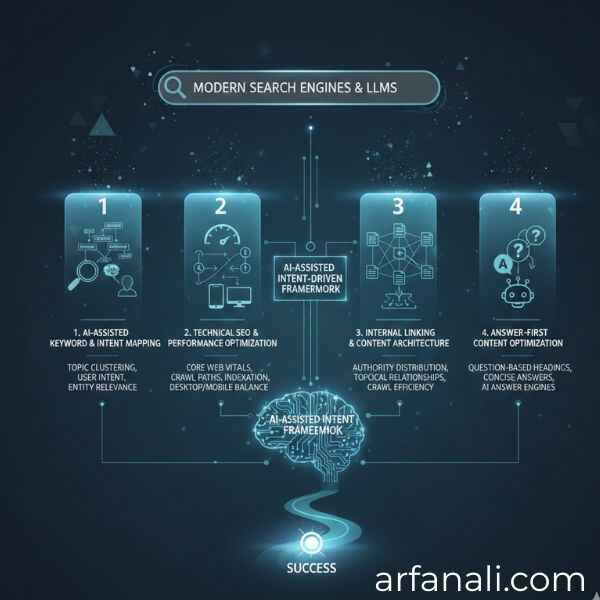
1. AI‑Assisted Keyword & Intent Mapping
Topics were clustered based on user intent, entity relevance, and semantic relationships instead of targeting isolated keywords. This helped establish topical depth and clarity.
2. Technical SEO & Performance Optimization
💨 Core Web Vitals optimization
🕵️ Improved crawl paths and indexation control
💻 Desktop and mobile performance balancing
3. Internal Linking & Content Architecture
A structured internal linking system was built to distribute authority, strengthen topical relationships, and improve crawl efficiency.
4. Answer‑First Content Optimization
Content was rewritten using question‑based headings and concise answers, making it easily extractable by AI answer engines.
❓ What results did this SEO strategy deliver?
The AI‑driven SEO framework produced measurable and sustainable improvements.
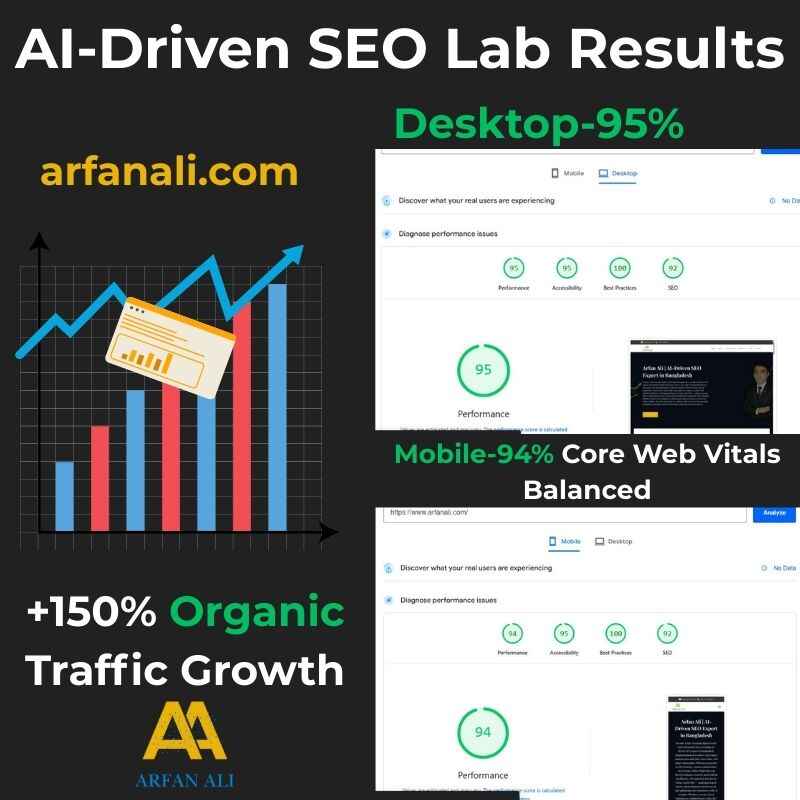
Key Results
These results were achieved without paid links or manipulative tactics, focusing instead on structure, performance, and trust.
❓ How did SEO improve visual search and SERP visibility?
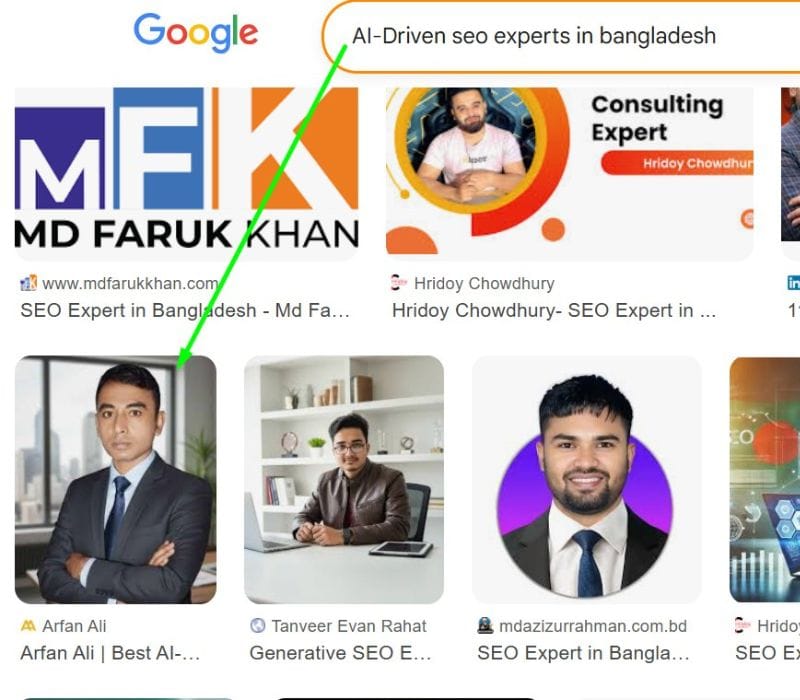
Image optimization and entity‑based SEO helped strengthen both visual search presence and branded SERP recognition.
Key actions included:
🖼️ Context‑driven image placement
✍️ Optimized alt text and captions
🎯 Alignment between images, content intent, and entity signals
As a result, the website gained stronger recognition in Google Image Search and brand‑related search results.
Why is this SEO approach future‑proof?
This SEO strategy aligns with how AI‑powered search systems evaluate trust, authority, and answer quality.
Instead of focusing only on rankings, the framework prioritizes:
- Clear entity definition
- Extractable answers
- Performance‑driven user experience
This ensures long‑term visibility across traditional search and AI‑generated search experiences.
About the SEO Expert
Arfan Ali is an AI‑First SEO Expert specializing in Answer Engine Optimization, technical SEO, and scalable organic growth. His work focuses on helping brands become trusted sources for both search engines and AI‑powered answer systems.
This case study reflects a real, data‑driven SEO framework designed for the next generation of search
SEO Case Study – FAQs
What is the main outcome of this SEO case study?
The primary outcome is sustained organic growth driven by authority, performance optimization, and answer‑focused content design.
Is AI used in this SEO process?
Yes. AI is used for intent analysis, topic clustering, and structuring content for answer engines.
Who is this SEO strategy suitable for?
This strategy is ideal for brands, consultants, and service‑based businesses seeking long‑term, future‑proof SEO growth.
How long did it take to see results?
Early improvements appeared within weeks, while stable and scalable growth developed over several months.
Contact Arfan Ali Today

Phone/WhatsApp: +8801621300814